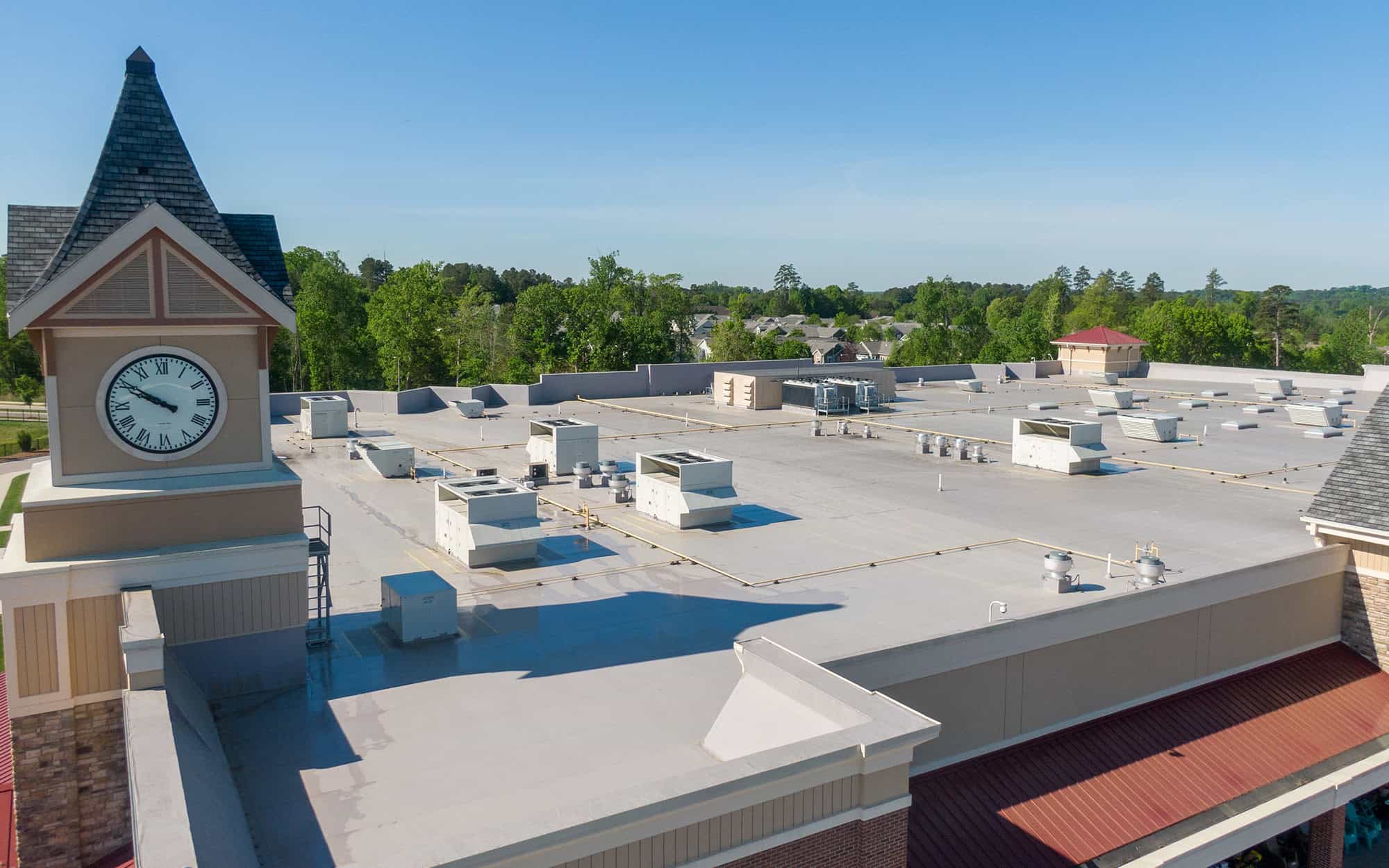
Food Processing and Cold Storage Roofing starts with the actual roof condition.
Baltimore's food processing and cold storage sector reflects the city's historic role as a port city, a regional distribution hub, and an anchor of the Mid-Atlantic food supply chain. The Port of Baltimore — the nation's leading auto import port — also handles significant food commodity imports, including tropical fruit, seafood, and processed food products. The food distribution infrastructure in Baltimore County and surrounding Anne Arundel and Howard Counties supports grocery chains including Giant Food, Safeway, and Wegmans' Mid-Atlantic distribution network, as well as the foodservice supply chains serving the Washington-Baltimore metro. McCormick & Company, whose spice and flavoring operations have been central to Baltimore's food manufacturing identity for generations, represents the kind of food processing anchor that has defined the city's industry profile.
HACCP compliance requirements in Baltimore food facilities operate under both FDA and USDA oversight depending on the commodity, with USDA FSIS maintaining inspection presence at the region's meat and poultry operations and FDA FSMA governing everything from produce distribution to processed food manufacturing. For roofing work, the distinction matters because USDA-inspected facilities have on-site federal inspectors who can halt work that doesn't meet contamination control standards, while FDA-regulated facilities self-monitor compliance. In either case, contamination control protocols for overhead work are non-negotiable, and Baltimore's food safety community — shaped by decades of HACCP implementation across a diverse facility base — has developed mature expectations about what contractor compliance looks like.
Vapor management for Baltimore cold storage is complicated by the region's humidity. Baltimore's humid subtropical climate means summer relative humidity regularly exceeds 70 percent, with dewpoint temperatures in the high 60s°F during peak summer weeks. This creates one of the most aggressive vapor pressure environments for cold storage roofing in the eastern United States — an environment where vapor retarder continuity failures that might cause slow, gradual moisture accumulation in a drier climate cause rapid insulation degradation in Baltimore's conditions. Facilities that have experienced vapor barrier failures in Baltimore cold storage buildings report losing half or more of their insulation R-value within three to five years of the failure — a timeline that has made vapor retarder design and installation quality the top priority in Baltimore cold storage roofing.
High-pressure wash-down in Baltimore seafood processing and prepared food manufacturing facilities is among the most chemically aggressive in the food industry. Seafood processing uses wash-down chemicals designed to address high protein and lipid contamination, and the combination of organic load and chemical sanitizer creates a wall and ceiling surface environment that accelerates flashing degradation at parapet bases. The corrosive vapors from some seafood processing sanitation chemicals can also attack exposed metal flashing components — lead, galvanized steel, and aluminum all show accelerated corrosion in long-term seafood facility service. Stainless steel or heavy-gauge copper flashing components are preferred in Baltimore seafood processing facilities for their corrosion resistance, despite their higher initial cost.
Cold storage and food distribution anchors in the Baltimore market include the Sysco Baltimore distribution complex, the McLane Company Mid-Atlantic distribution operations, and the cold chain infrastructure supporting the Giant Food and Safeway Mid-Atlantic supply networks. The Baltimore-Washington corridor's food distribution density means that new cold storage development in the I-95, I-695, and I-70 corridors serves both the Baltimore and Washington consumer markets simultaneously, and the facilities that serve this dual-market role tend to be large, sophisticated operations with high food safety program standards.
Baltimore's winter weather creates specific challenges for cold storage roof performance that are less severe in the Southeast but significant here. Freeze-thaw cycling at 40 to 50 events per year is hard on cold storage roof flashings, where the combination of thermal differential between the cold interior and the variable exterior temperature and the mechanical movement of the building envelope creates fatigue stress at flashing terminations. Baltimore cold storage operators have learned that flashing inspection after each winter season — checking for flashing edge lifting, sealant cracking, and termination bar separation — is a necessary annual investment, not a reactive response to visible leaks.
Insulation specification for Baltimore cold storage reflects the climate's dual demands: sufficient R-value to manage vapor pressure and heat gain in humid summers, and sufficient thermal continuity to prevent condensation issues during the freeze-thaw periods of winter. For below-freezing storage in Baltimore, the standard assembly targets R-35 to R-40 with a warm-side polyiso layer above the vapor retarder and XPS at or near the deck level. For fresh produce and refrigerated (above-freezing) distribution, a polyiso-only assembly at R-25 to R-30 is typical. The vapor retarder — positioned carefully on the warm side in a truly continuous installation — is the detail that makes or breaks the system's long-term performance in Baltimore's humidity conditions.
The McCormick & Company spice processing legacy in Hunt Valley, north of Baltimore, represents a food manufacturing environment with a distinct roofing challenge: spice dust. Dry spice processing creates fine particulate in the facility air that can deposit in HVAC systems, accumulate in roof penetration flashings, and in some cases create fire risk in dust concentrations. Roof penetration flashings above spice processing areas should use smooth, easily cleaned surfaces rather than textured materials where particulate can accumulate, and HVAC equipment curbs should be detailed with drainage designed to flush particulate residue during rain events rather than allowing it to accumulate in curb base areas.