Humidity & Moisture Damage Roof Repair starts with the actual roof condition.
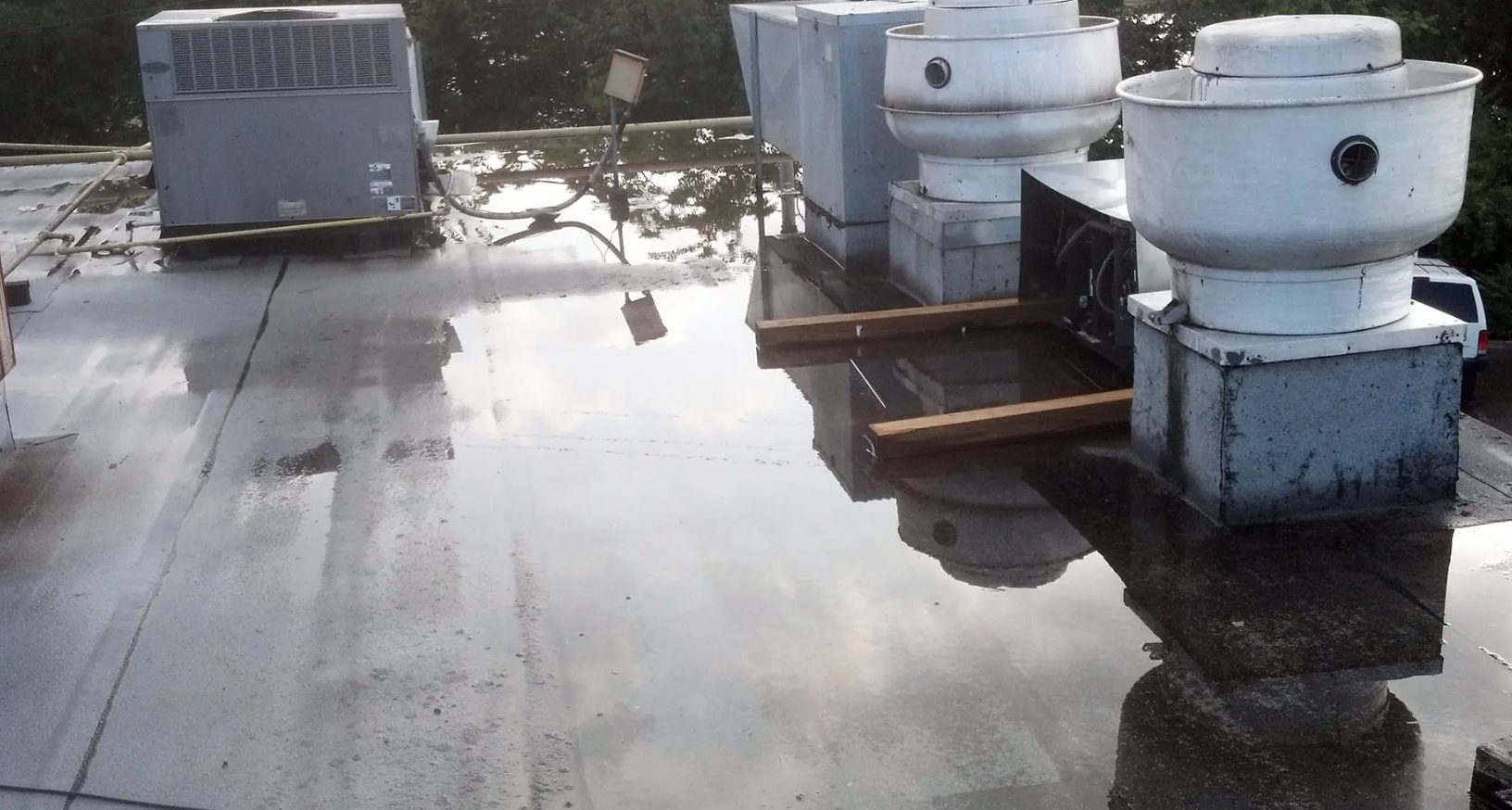
Not every wet roof leaked. A surprising share of the moisture damage we repair on Baltimore commercial buildings never came through the membrane at all, it rose into the assembly from inside the building. Laundries and commissary kitchens around the Highlandtown and Greektown commercial strips, the natatoriums and labs near the universities, and the cold-storage and processing plants down in Curtis Bay all push warm, moisture-laden air up against the underside of their roofs every day. In Baltimore's humid mid-Atlantic climate that vapor finds its way into the insulation, condenses, and quietly destroys the assembly from within. Repairing that damage means understanding building physics, not just patching a hole.
Why Interior Humidity Wrecks A Roof From Below
Warm interior air holds far more water vapor than cold air, and that vapor is under pressure to move toward the colder, drier outdoors, which in our climate means upward through the roof for much of the year. When that rising vapor passes a vapor retarder that is missing, torn, or installed on the wrong side of the insulation, it keeps going until it hits a cold surface near the top of the assembly and condenses into liquid water inside the insulation. There it sits. The membrane above can be flawless and the roof can still be soaked, because the water never came from the sky. This is the failure mode that confuses owners and the cheap fix, recovering over the top, that makes it worse.
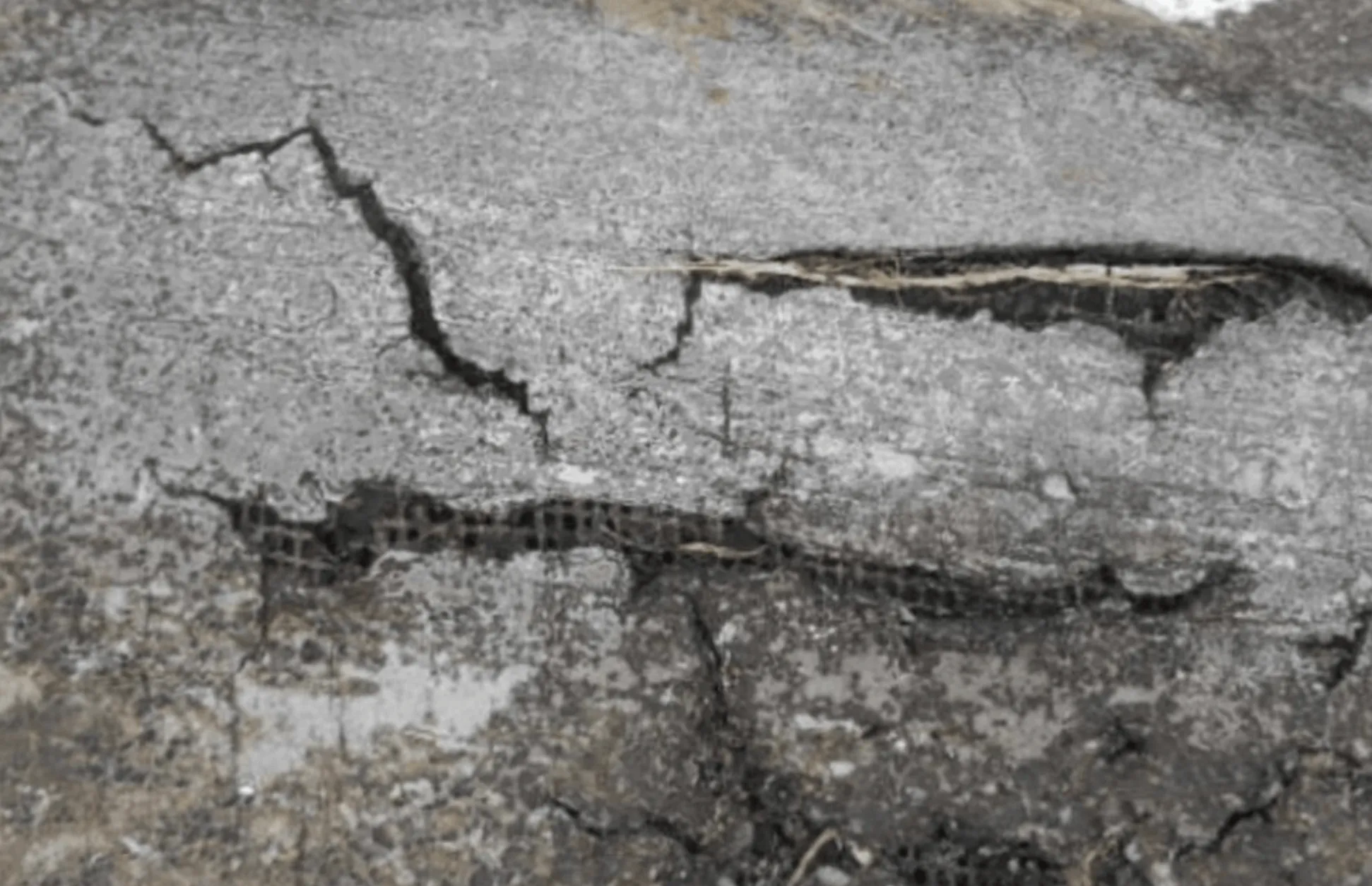
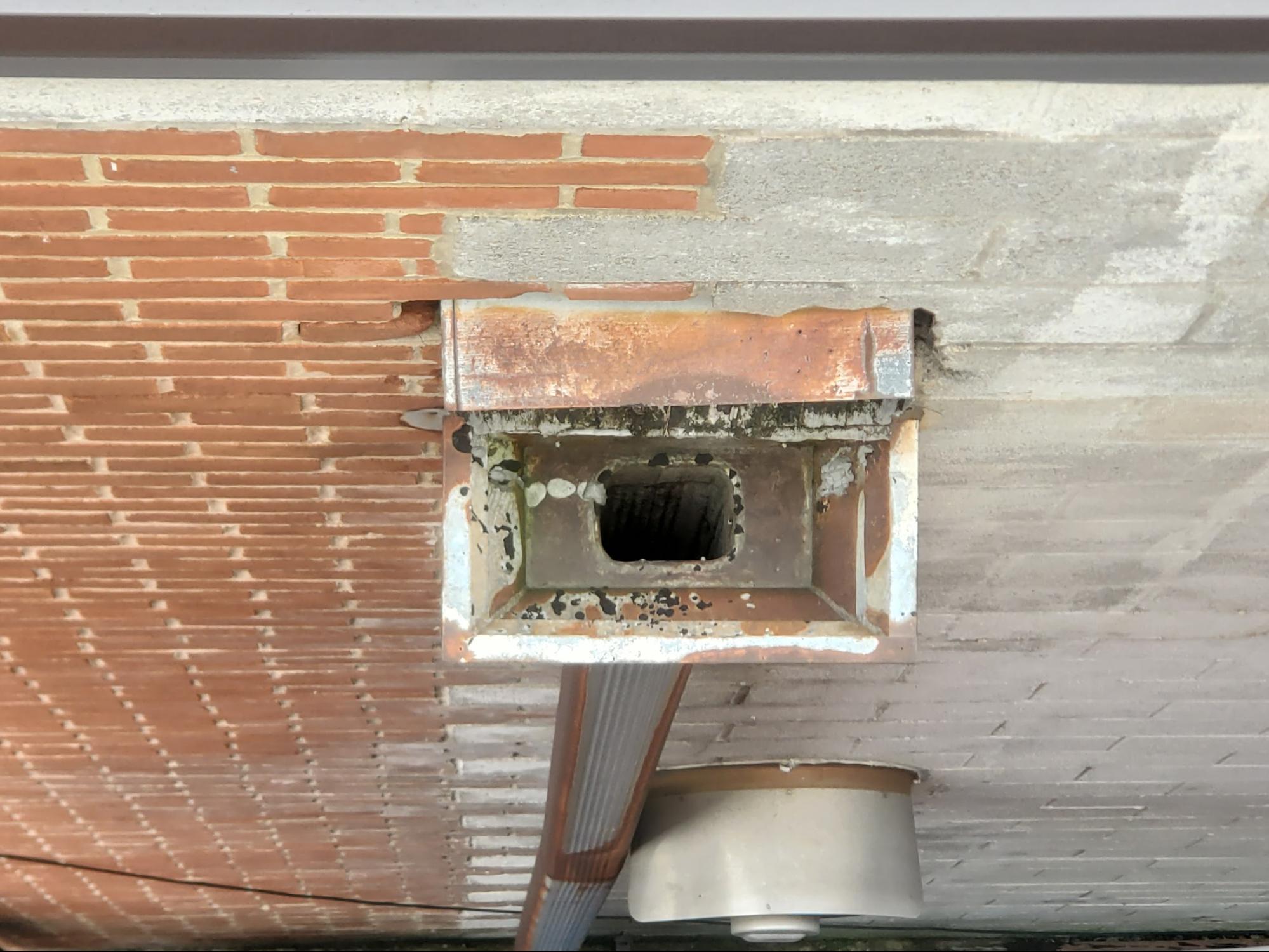
Trapped moisture announces itself in a handful of recognizable ways once it has been working for a season or two. Blisters form where vapor pressure builds beneath the membrane and lifts it off its substrate. Ridging shows up as long raised lines following the insulation board joints, where moisture has swelled the boards and telegraphed through the sheet. The field starts to feel soft underfoot as saturated insulation loses its rigidity. Edge metal and coping lift as the fasteners holding them corrode in the damp. And on steel-deck buildings, the deck itself begins to rust from the top down where wet insulation has been pressed against it for years. We see every one of these patterns on Baltimore roofs, and we document them all before scoping a repair so the fix addresses the cause and not just the symptom.
You cannot reliably find trapped moisture by walking a roof, because the surface often looks fine over the worst of it. Infrared moisture scanning is the right diagnostic tool. Saturated insulation carries more thermal mass than the dry field around it, so after a warm day it radiates the stored heat well into the evening while the dry areas cool off. Scanned during that window, the wet zones glow against the cooler background and their boundaries can be marked out precisely. We confirm the infrared findings with core cuts at flagged spots, pulling a plug to see the actual insulation moisture, the deck condition, and which side the vapor retarder is on. On any Baltimore building that has not had a documented moisture survey in the last few years, we treat the survey as step one, because wet insulation caught early is a repair and wet insulation caught after it has rusted the deck is a replacement.
Repairing The Cause, Not Just The Membrane
A real humidity-damage repair removes the saturated material and corrects whatever let the moisture in. We cut out the wet insulation back to dry, sound board, replace it with new insulation, and restore the membrane and flashings over the repair. Where the diagnosis points to a vapor retarder on the wrong side of the assembly or missing entirely, simply replacing wet board with dry board is a temporary measure, the new board will wet out the same way. In those cases the durable fix is to rebuild the assembly with the vapor retarder positioned for an upward vapor drive, which in our climate generally means low in the assembly near the warm side, so the building physics work with the roof instead of against it.
Whether you can repair or have to replace depends on how far the moisture has spread. Discrete wet zones confirmed by infrared, surrounded by a dry field, are a strong candidate for cut-and-patch: remove the wet insulation, reinsulate, and reseal. Once saturation runs across a large share of the field, or once the steel deck has corroded enough to compromise its strength, targeted repair stops making sense and full replacement, with deck remediation where needed, becomes the honest recommendation. We give owners both numbers, the cost to repair the confirmed wet zones and the cost to replace, after the survey is done, so the decision is made on data.