Airport Terminal & Aviation Facility Roofing starts with the actual roof condition.
Airport Terminal & Aviation Facility Roofing in Baltimore, MD
An airport never closes, and that single fact rewrites every assumption a roofing crew brings to the job. There is no after-hours shutdown, no quiet weekend, no empty building to work over. Every access point, every material lift, and every crew deployment has to be coordinated with the airport's facilities department, the FAA Part 139 safety program, and in secure areas the TSA access protocols. We build that coordination into the scope before the contract is signed, not after we mobilize and discover the badging line is a week long. Aviation roofing rewards planning and punishes improvisation, and we approach it accordingly.
Baltimore/Washington International Thurgood Marshall Airport drives most of the aviation roofing demand in the region. BWI is one of the busiest airports on the East Coast and a major Southwest Airlines base, moving millions of passengers a year and running around the clock. Beyond the terminal itself, the BWI campus carries a large air-cargo complex, consolidated rental-car facilities, an airport hotel cluster, FBO and general-aviation hangars, and ongoing concourse and infrastructure work, all of which sit on roofs that age and need attention on the same campus where airfield operations never stop. The reliever and general-aviation fields around the corridor add hangar and support-building work to the mix.
Why a terminal roof is its own category
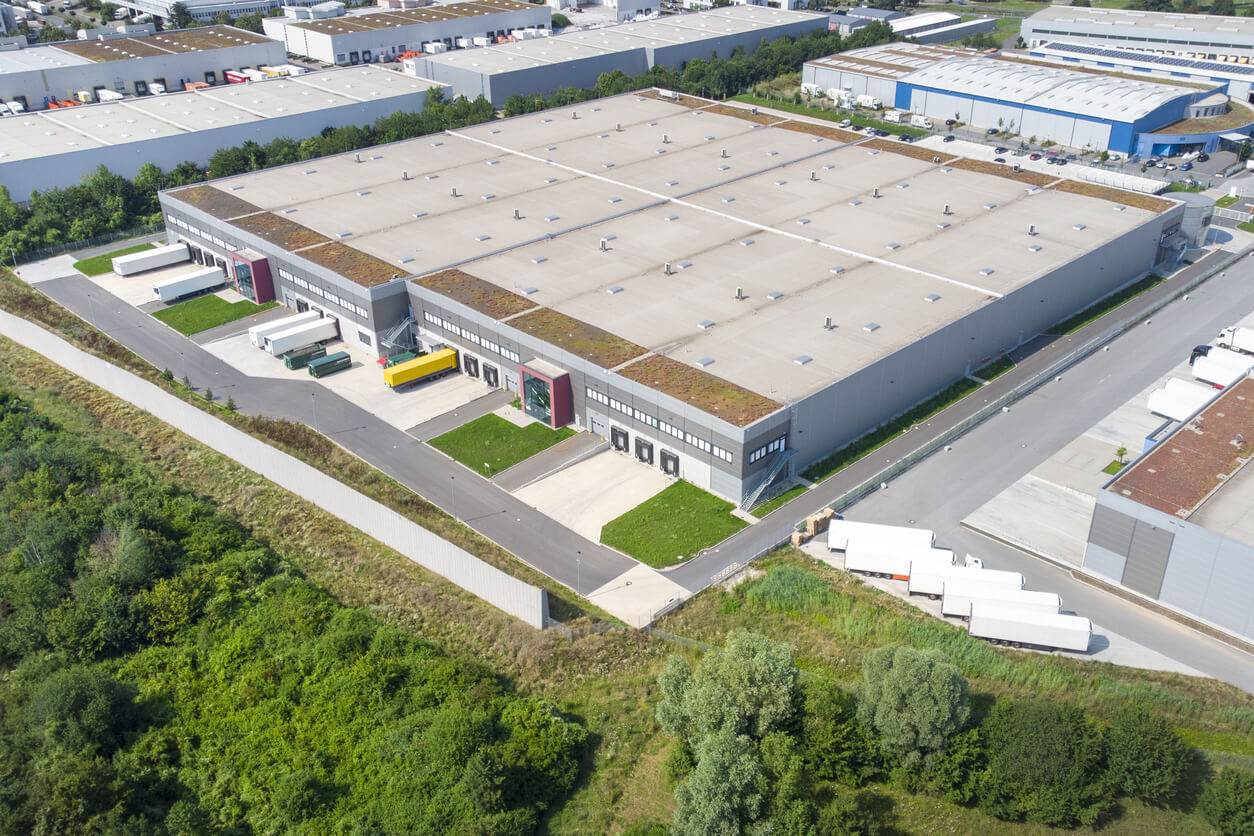
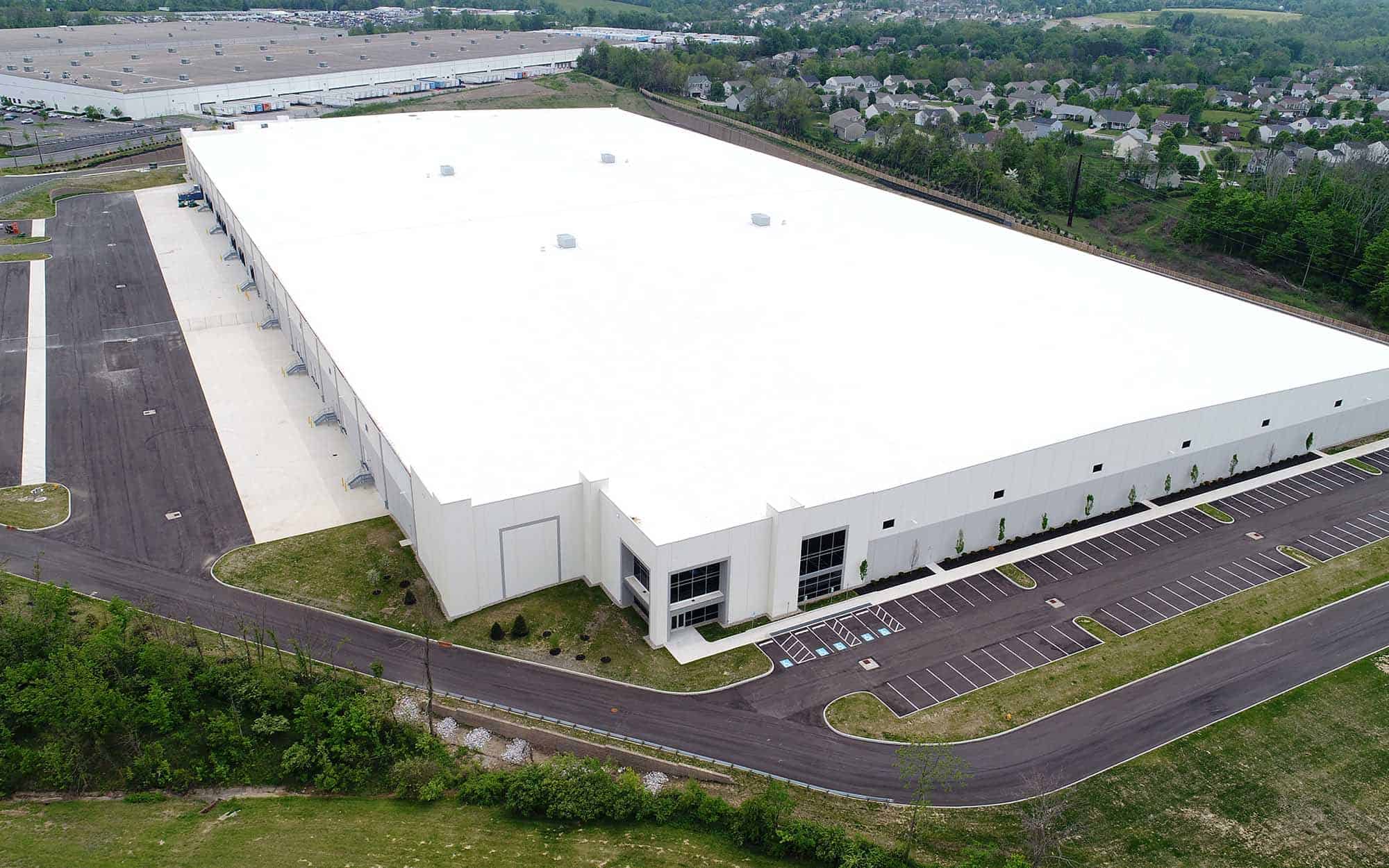
Terminal and airside roofs carry requirements that go well past a standard commercial membrane. Airside roofs sit in the path of jet blast, so membrane adhesion and ballast have to be specified beyond what you would use on a comparable warehouse, or the wind energy off taxiing aircraft will lift and peel an under-attached system. Terminals also carry far denser and heavier rooftop HVAC than ordinary commercial buildings, which means more curbed penetrations and more flashing-maintenance touchpoints per acre. And terminal roofs are typically huge, low-slope expanses where drainage design is everything and ponding tolerance is essentially zero, because a flat acre of roof with a blocked drain becomes a structural load problem before it becomes a leak. We have done this work, and we do not learn those lessons on an owner's project.
Large roof areas and wind exposure
Scale changes the math. A terminal or a cargo building can put acres of membrane on a single roof, and across that span the wind-uplift zones, the perimeter and corner enhancements, and the drainage path all have to be engineered rather than carried over from a small-building detail. The perimeter and corners of a large airport roof see the highest uplift pressures on the building, and the attachment there is upgraded accordingly. We document the existing deck, the load capacity, and the drainage pattern before we settle on a system, because the wrong assumption over that much area is an expensive mistake.
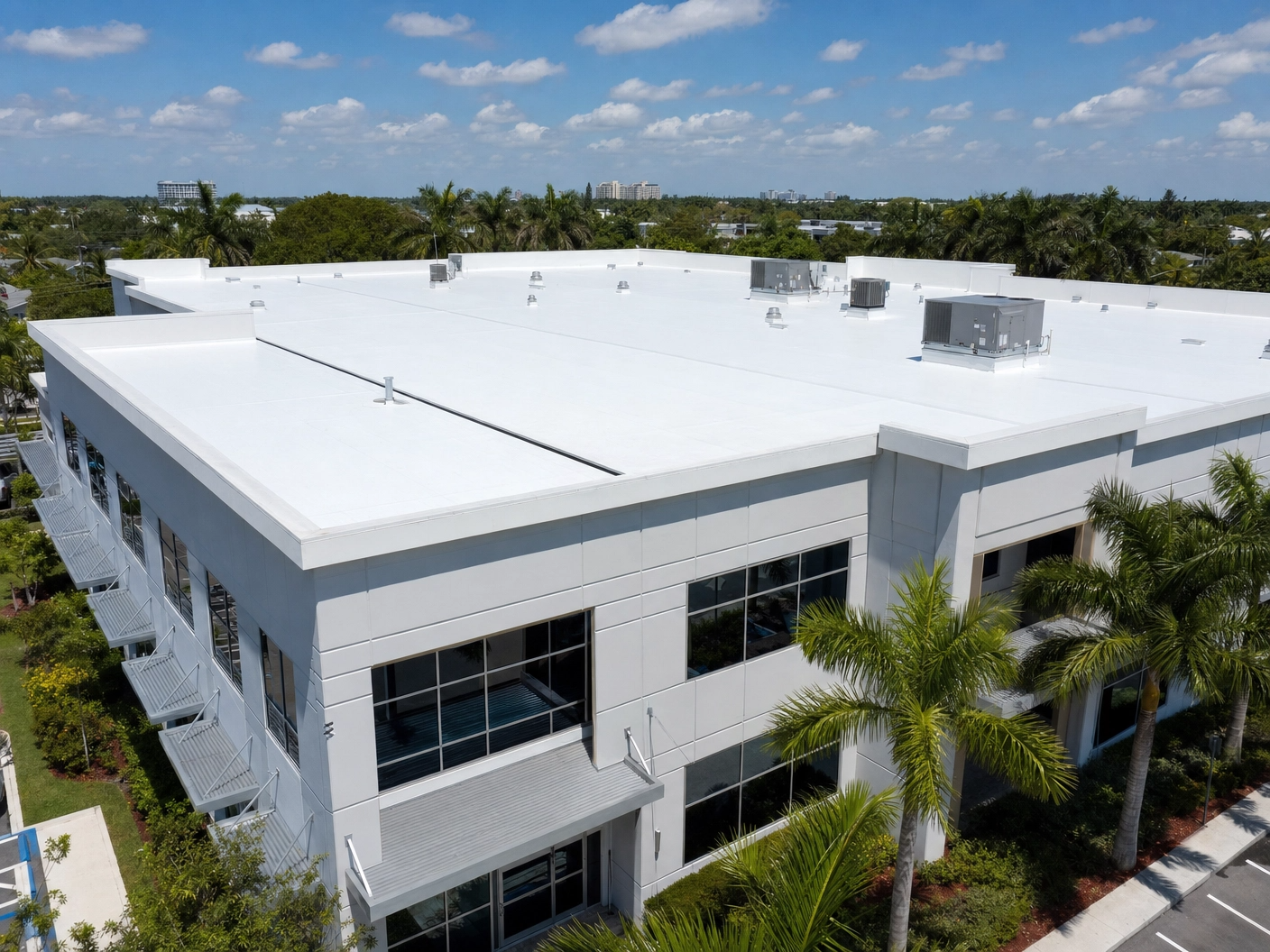
The HVAC density on a terminal is significantly higher than standard commercial, and every unit, curb, and through-penetration is a place water can get in. Our pre-project survey documents every penetration, curb height, and mechanical clearance before we build the work plan, and oversized equipment curbs and complex through-penetrations get individually engineered flashing details. We do not carry generic small-building flashing patterns onto an aviation structure.