Automotive Manufacturing Roofing starts with the actual roof condition.
An automotive plant roof is measured in acres, not squares, and the building under it has a number attached to every hour the line is down. That single fact, the cost of an interruption, shapes how the whole job gets planned: how we phase it, how we stage material, and how we confirm the roof is watertight before every shift change. Roofing one of these is a logistics problem as much as a roofing problem, and we approach it that way.
Baltimore's automotive history is built into its industrial stock
This region knows car building. The old GM Broening Highway plant on the Southeast side ran for decades, and the supplier base it pulled in left behind a deep bench of stamping shops, parts plants, and Tier 1 and Tier 2 facilities across the Holabird, Pulaski Highway, and Sparrows Point industrial corridors. Sparrows Point itself, once steel, is now the Tradepoint Atlantic complex feeding heavy manufacturing and logistics. Those buildings carry the big roof decks, process loads, and ventilation demands automotive work brings, and many are decades into a roof that was never designed for what is on it now. We work across that whole range, from active assembly to component supply.
These are some of the largest decks in commercial roofing
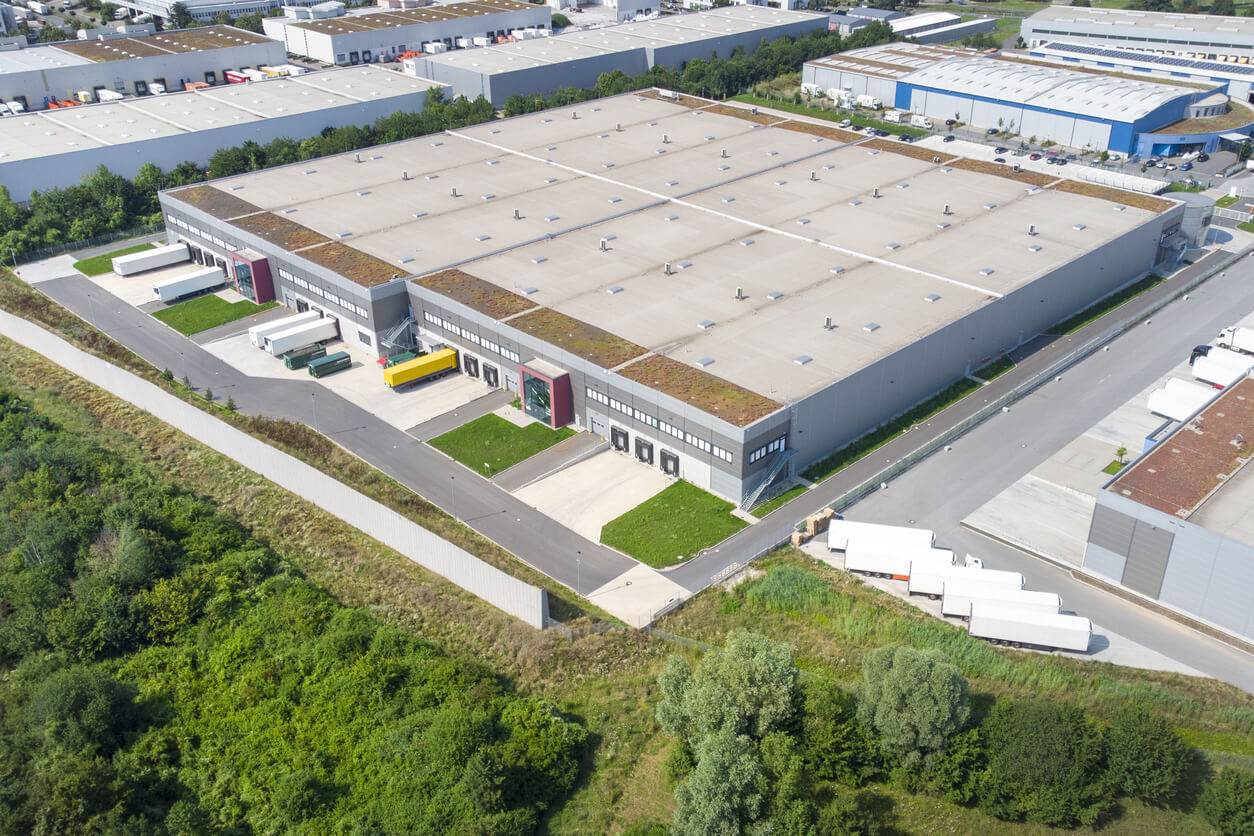
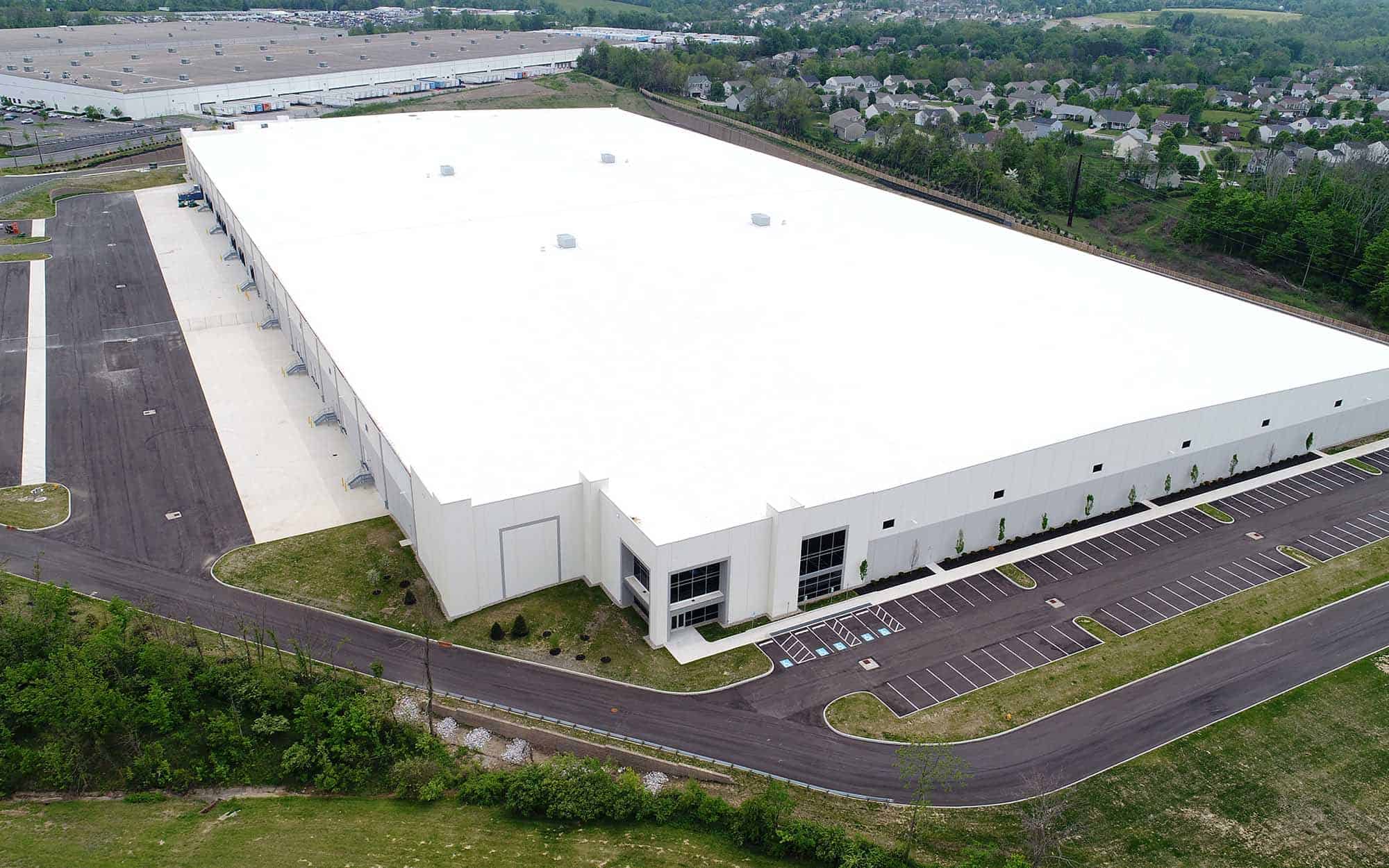
A single assembly or stamping building can run from several hundred thousand to a few million square feet under one envelope. You cannot tear off a roof that size in one pass, so the work gets sectioned into zones, with tear-off and material delivery sequenced to stay inside crane reach and the storage room you actually have on site. Production keeps running in the zones we are not in, which means dry-in discipline at every boundary. We plan the sequence around keeping the building closed and the line moving, because on a roof this size, one open section caught by a storm is a very expensive mistake.
Process loads and rooftop ventilation
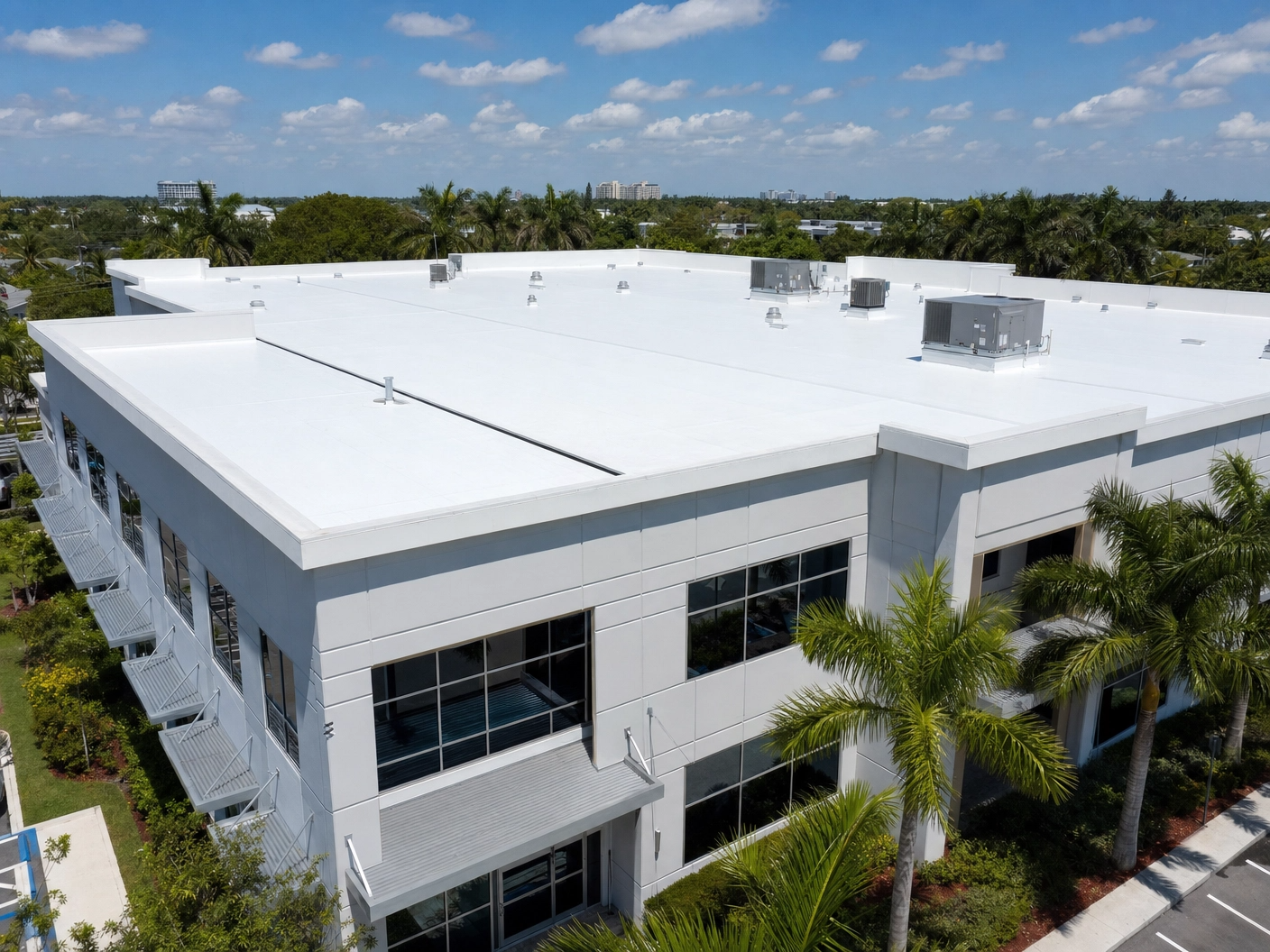
Automotive plants pile equipment and air handling on the roof. Heavy makeup-air units, weld-fume and process exhaust, and dust collection all add structural load and a dense field of penetrations the original roof may not have planned for. Before we set insulation thickness or add anything, we confirm the deck can carry it, and we flash every curb and penetration as its own detail rather than running a template across the field.