Mixed-Use Development Roofing starts with the actual roof condition.
Mixed-Use Development Roofing in Baltimore, MD
A mixed-use building is really several buildings stacked into one envelope, and the roofing reflects that. Ground-floor retail, office floors, apartments above, and structured parking woven into the base each sit under a different roof or deck condition, each runs on a different occupancy schedule, and each carries a different consequence when water gets in. A leak over a leasing office is an inconvenience. The same leak over a tenant's unit or a finished plaza is a liability claim. We scope these projects vertically, mapping how the uses interact through the structure, instead of treating the whole thing as one flat plane to cover.
Baltimore has leaned hard into mixed-use over the last decade, and the building stock shows it. Harbor East and Harbor Point pair ground-floor retail and restaurants with office and residential towers right on the water. Brewers Hill and Canton turned old industrial frontage along the Canton waterfront into apartments over shops. Remington and Hampden along the Falls Road corridor added ground-up mixed-use blocks next to adaptive reuse of former mill and warehouse buildings. Up in Towson and out toward Owings Mills, transit-adjacent and town-center developments stack residential over retail in a different form. Each of these contexts puts its own constraints on access, staging, and what is happening directly below the roof.
Podium decks are not flat roofing
The most expensive mistake on a mixed-use project is treating a podium deck like a roof. The podium is the structural slab that separates parking or retail at grade from the occupied space above, and it usually carries a plaza, a courtyard, planters, or an amenity area on top. That assembly has to handle structural deflection, constant hydrostatic pressure in planted zones, root intrusion from landscaping, and pedestrian or even light vehicle traffic, all of it sitting directly over occupied space. A standard roofing membrane is the wrong product here. Podium and plaza waterproofing means a traffic-bearing membrane, drainage composites, root barriers under landscaped areas, and an insulation and load path coordinated with the structural engineer. When someone specs an ordinary single-ply over a plaza deck, it tends to fail within a few years, and the repair means pulling up finished hardscape over people's homes.
The tower roof and amenity deck
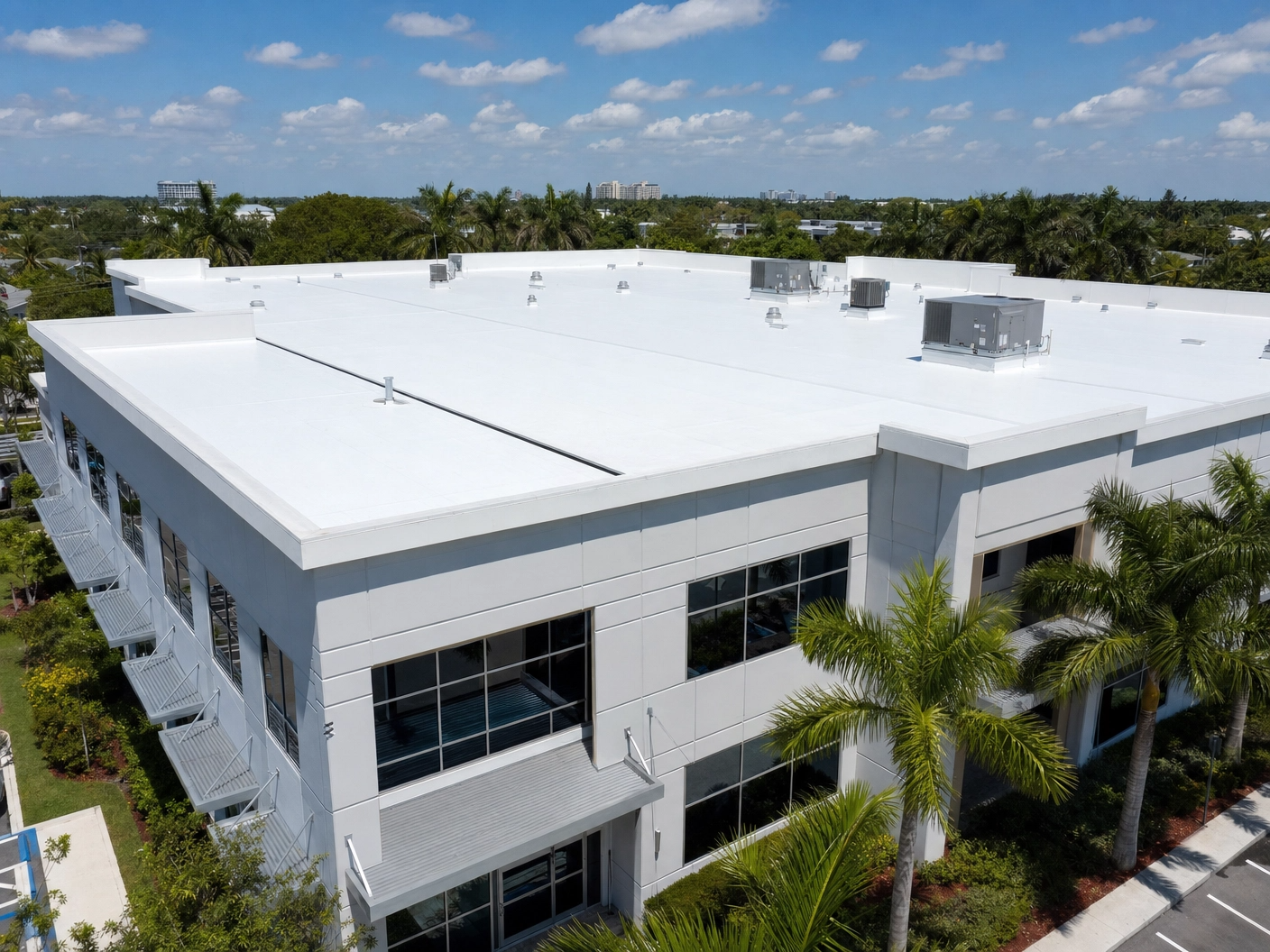
Up top, a mixed-use residential tower brings its own list. Parapet drainage has to be right because there is no second chance over occupied units. Mechanical penthouses, elevator overruns, and rooftop amenity decks all need flash-through and termination details that hold. Rooftop amenity decks in particular, which have become standard on Baltimore's mid- and high-rise residential projects, need a traffic-bearing waterproofing assembly under the finished surface rather than a membrane that was only ever meant to be walked on by a maintenance tech twice a year. We install and warranty those assemblies in coordination with the deck-finish contractor and the structural engineer of record.